How to Remove Chloramine From Your Tap Water in Irvine
More than one in five Americans drink water treated with chloramine, a disinfectant that utilities have relied on since the 1930s. If you have noticed a faint chemical or swimming-pool smell at your Irvine tap, chlorine or chloramine is the usual reason, and it is also one of the easiest things to filter out. This guide explains what chloramine is, why it ends up in your water, and how to remove chloramine from your tap water at home.
Chloramine is a long-lasting disinfectant made from chlorine and ammonia.
Chloramine forms when ammonia is added to chlorine during water treatment. According to the U.S. Environmental Protection Agency, utilities have used it since the 1930s because it provides longer-lasting disinfection as water travels through miles of pipe to your home. Many systems switched from chlorine to chloramine specifically to reduce disinfection byproducts, and today more than one in five Americans receive chloraminated water.
Your Irvine water is treated to be safe, so removal is mostly about taste.
Water that contains chloramine and meets EPA standards is safe to use for drinking, cooking, and bathing. Filtering it is a comfort and quality choice, not a safety emergency. Irvine's water is delivered by the Irvine Ranch Water District, and the fastest way to confirm whether your specific system uses chlorine or chloramine is to check the annual water quality report your utility publishes each year.
Two groups tend to remove it deliberately: aquarium owners, because chloramine does not evaporate out of standing water the way chlorine does and must be neutralized before use, and anyone bothered by the taste or smell in their drinking water.
Activated carbon is the standard way to remove chlorine and chloramine.
The most common and cost-effective method is activated carbon filtration. The CDC notes that carbon filters improve the taste and smell of water and remove chlorine. Chloramine is more stubborn than chlorine, so it needs more carbon contact time, which is why catalytic carbon is often used specifically for chloramine reduction. In practice you have a few options:
- An under-sink carbon filter for the water you drink and cook with
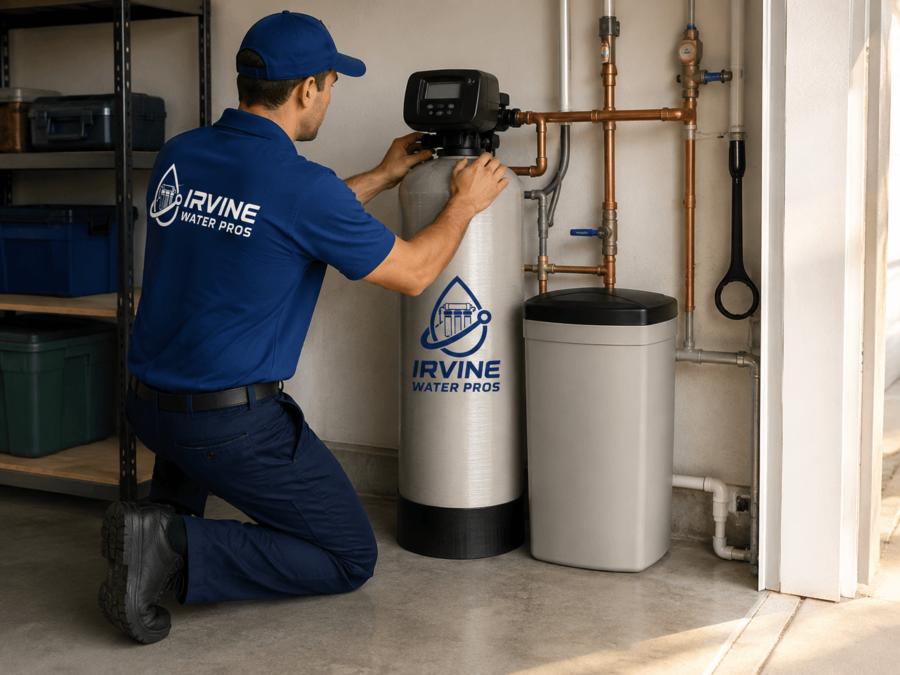
- A whole-house carbon system so every tap, including showers, is covered
- Catalytic carbon, a form built for the tougher job of reducing chloramine
- A reverse osmosis system, which pairs carbon with a membrane for drinking water
One caution from the CDC: a whole-house filter that strips out chlorine or chloramine also removes the disinfectant that keeps your plumbing clean, so more germs can grow downstream if the system is not sized and maintained correctly. That is a good reason to have whole-home carbon installed and serviced properly rather than treated as a weekend project.
Tired of that chemical taste at the tap? We will test your Irvine water and show you the simplest way to fix the taste for good.
Get a Free QuoteHow to choose the right filter for your home.
Start by testing your water or reading your utility report so you know what you are actually treating; the CDC recommends this as the first step before buying any filter. From there, the choice comes down to scope. If you only want better-tasting water at the kitchen sink, an under-sink filter is enough. If you want chloramine gone from every faucet and shower, a whole-housecarbon filtration system is the better fit. Whichever you choose, look for a filter that is NSF-certified for the contaminants you care about.
Chloramine is not a safety problem in treated tap water; it is a taste-and-quality one. The right carbon filter simply gives you water that tastes like nothing at all.
Common questions about chloramine in Irvine water
Is chloramine in tap water safe to drink?
Yes. The EPA states that water containing chloramine that meets its standards is safe for drinking, cooking, and bathing. Removing it is a matter of taste, odor, and specific uses rather than basic safety.
How is chloramine different from chlorine?
Both are disinfectants, but chloramine is made by combining chlorine with ammonia, which makes it last far longer as water moves through the distribution system. Because it is more persistent, it also does not off-gas from a glass of standing water the way chlorine does.
What kind of filter removes chloramine?
Activated carbon is the standard choice, and the CDC notes carbon filters remove chlorine and improve taste and smell. Chloramine specifically often calls for catalytic carbon or more contact time, so check that your filter is NSF-certified for chloramine or chlorine reduction.
Sources: U.S. Environmental Protection Agency, Chloramines in Drinking Water (epa.gov); U.S. Centers for Disease Control and Prevention, About Choosing Home Water Filters (cdc.gov).
Have a Question About Your Water?
The fastest way to real answers is an on-site water test. We'll measure it, explain it, and tell you honestly what — if anything — you need.
Get a Free QuoteCall (949) 687-3362 — Irvine's licensed, test-first water team.